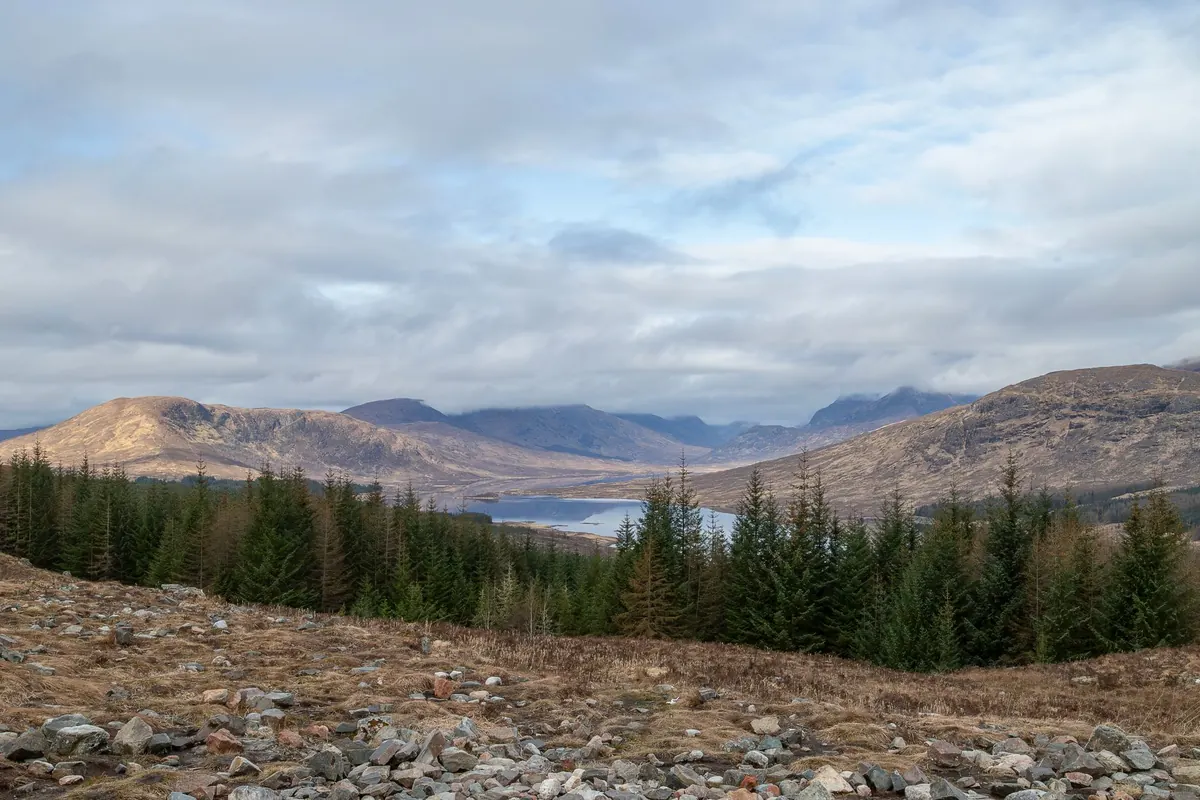
Walk into an old Caledonian pinewood and you notice the light first. Scots pines stand well apart, their bark furred with lichen, their crowns flattened and wide. Between them the ground is a patchwork of heather, blaeberry and moss, and the air smells of resin and warm needles. These woods are among the oldest habitats in Britain. They are also a shadow of what once grew here.
What actually makes a Caledonian pinewood
The name is romantic and slightly misleading. Ecologists tend to say "native pinewood" or "Scots pine woodland", because the forest was never a solid block of one tree. It was a mosaic: open pinewood on the drier slopes, birch and juniper on the edges, aspen and rowan in gullies, willow carr and bog in the hollows, and bare heath in between.
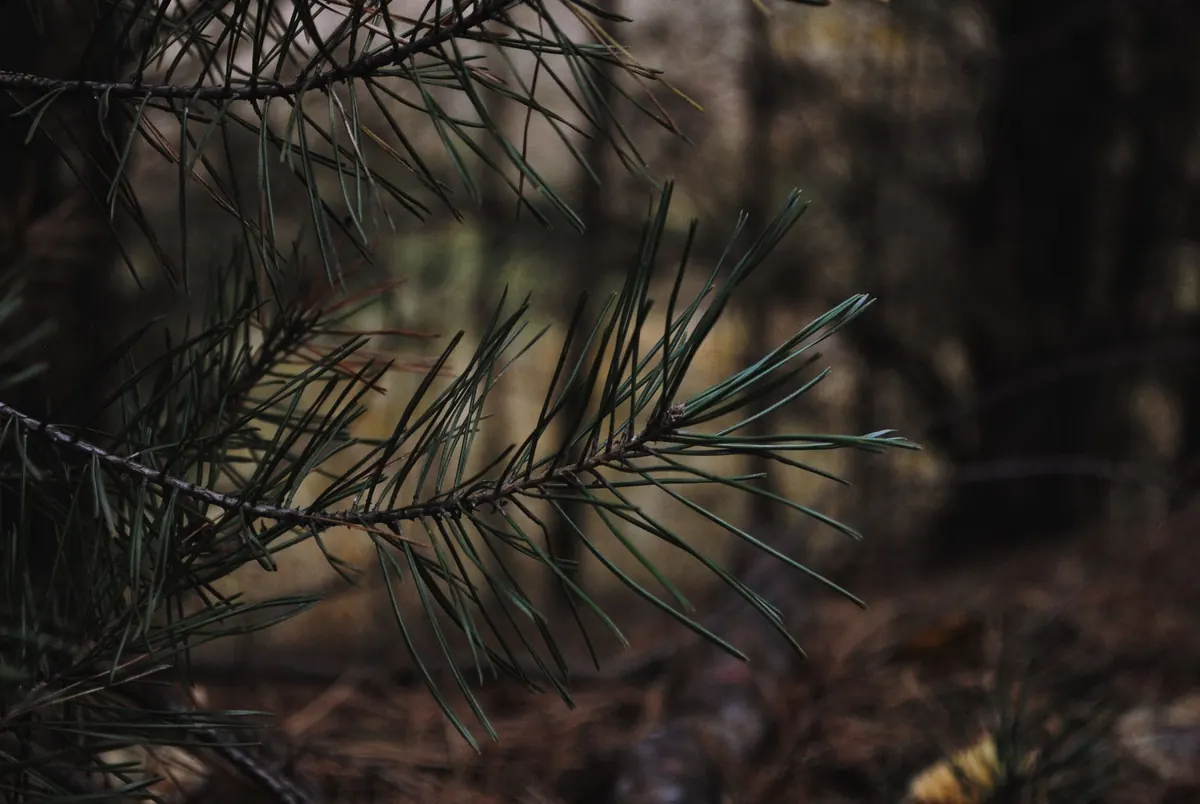
The defining tree is the native Scots pine, Pinus sylvestris. Scottish trees differ subtly from their continental cousins in shape and timber, and the oldest of them — the weathered, flat-topped "granny pines" that catch the eye in Glen Affric or Abernethy — may have been standing for several centuries. Those veterans matter out of all proportion to their number. Dead wood matters too, both standing and fallen, because beetles, fungi, lichens and woodpeckers depend on decay.
Underneath, look for a low, woody tangle of heather, blaeberry, cowberry, juniper and creeping shrubs, with twinflower, wintergreens and creeping ladies' tresses among the specialist plants. Soil, altitude and how wet the site is produce real variation: a pinewood in Strathspey does not look much like a pinewood in Wester Ross.
How the great wood shrank
After the last ice age, pine spread quickly across the Scottish Highlands — helped, in places, by people who were already managing the land. The decline was not a single disaster. Climate became wetter and cooler a few thousand years ago, and the pine's range contracted.
Then came centuries of pressure from people. Timber went into buildings, ships and pit props. Far more trees were felled for charcoal to feed iron smelting and for fuel and tanbark. Sheep numbers rose, then deer numbers rose again for sport. Felling during the two world wars took another bite. The crucial point is that grazing animals prevent regeneration: an old pine can live for centuries, but if every seedling is eaten, the wood cannot renew itself.
What survives is fragmentary. Estimates of how much remains hover around one per cent of the former extent, and the remnants are isolated from one another, which is nearly as damaging as the loss of area.
The wildlife that depends on it
Because pinewoods are rare, so are the species that live in them. Some are genuinely iconic:
- Capercaillie — reintroduced in the nineteenth century, now in serious decline. These grouse need mature pine, blaeberry, and quiet, undisturbed ground.
- Crested tit — in Britain, found only in Scottish pinewoods, where it nests in old stumps and crevices.
- Scottish crossbill — generally regarded as the UK's only endemic bird species, tied closely to pine cones.
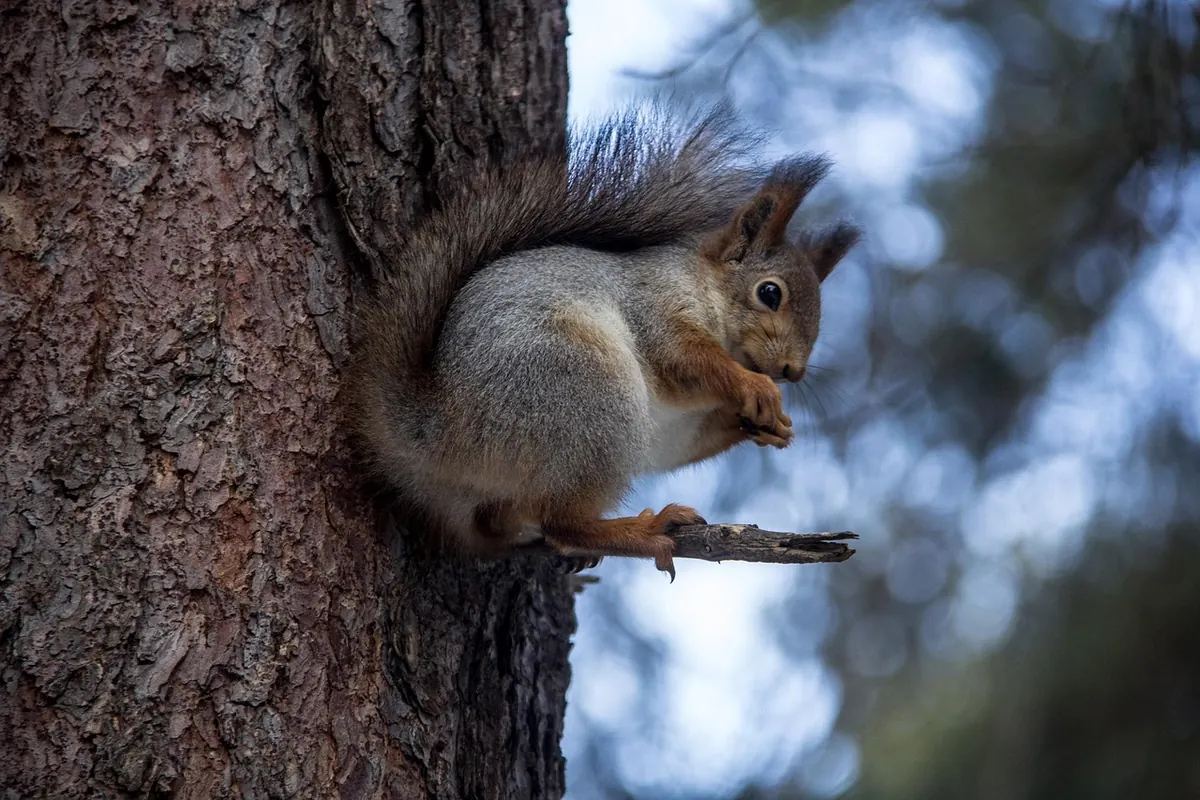
- Red squirrel — pinewoods give it a stronghold, since grey squirrels do less well among conifers.
- Pine marten, wildcat, golden eagle, osprey — all use pinewood edges and the wider Highland landscape.
- Wood ants, sawflies, hoverflies, and a long list of fungi — including the mycorrhizal partners that help pines take up water and nutrients.
There are quieter dependants too: lichens on old bark, beetles in decaying trunks, and plants such as twinflower, which spreads slowly and rarely survives disturbance. A pinewood with no old trees, no dead wood and no open glades is only half a pinewood.
What restoration really involves
Restoring these woods is less about planting than most people assume. It is mainly about removing the pressures that stop trees from reproducing naturally. In practice, that means an unglamorous list of jobs:
- Protect what is left, especially veteran trees and dead wood.
- Reduce browsing pressure from deer, through a combination of culling and, where appropriate, temporary fencing.
- Allow natural regeneration to extend the wood outward, rather than planting a new one in the same shape.
- Remove non-native conifers such as Sitka spruce and lodgepole pine that were planted close by and out-compete native stock.
- Reconnect fragments so that seeds, insects and animals can move between them.
- Restore the treeline and montane scrub above the pinewood, which have almost vanished.
- Use locally sourced seed and native stock wherever planting is genuinely needed.
Estates, charities, community trusts and government agencies now work together on this, with large landscape-scale projects in the Cairngorms and elsewhere. Progress is real, but it is slow: a pinewood that regenerates today will not look like a forest for fifty years.
Threats still in play
Deer remain the single biggest obstacle to regeneration across much of the Highlands. Fragmentation is close behind, because small isolated woods lose species over time. Climate change brings drought stress, new pests and the risk of larger, hotter fires. Tree disease is a live concern, particularly for planted conifers, and there is a real risk of restoration done badly — planting trees on deep peat, for instance, damages a carbon store rather than helping it. Recreation pressure, from straying dogs to disturbance at leks in spring, adds to the strain on sensitive species.
Visiting and helping
The best-known woods are all reachable in a day from most of Scotland: Rothiemurchus and Abernethy in Strathspey, Glen Affric, Glen Tanar in Deeside, Beinn Eighe in Wester Ross, the Black Wood of Rannoch, and Dundreggan near Loch Ness. Go in autumn or winter for atmosphere and fewer people; go in spring if you want to hear crossbills and see the light through fresh needles.
A few practical habits make a difference. Follow the Scottish Outdoor Access Code and any local signs. Keep to paths where ground is fragile. Light no fires and take all litter home. Keep dogs close, and on a lead in spring and early summer when capercaillie and other ground-nesting birds are breeding. Take photographs, not plants, seeds or fungi.
If you want to do more, support the charities managing these woods, volunteer on a regeneration project, and buy peat-free compost and British-grown native trees for your own garden. If you own or manage land and are thinking about planting, take advice first, check what is already regenerating, and avoid deep peat and other carbon-rich soils. Ordinary visitors, well-behaved and curious, are part of the future of these woods — the fragments need people who notice them.
Photo: Stuart Robinson / Pexels