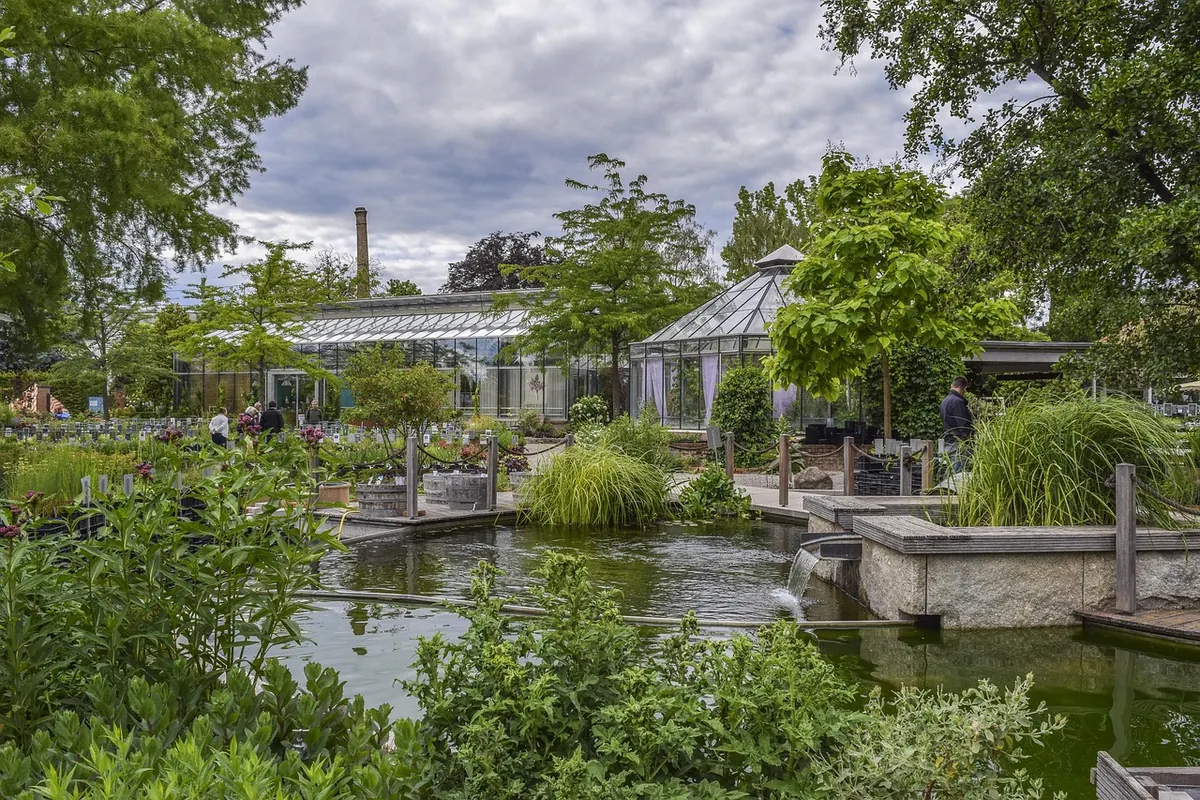
A pine is a long-term commitment. Get it right and a Scots pine may well outlive the person who planted it. That is worth remembering when you are standing in a cold nursery compound, looking at thirty near-identical pots and wondering which one to take home. The difference between a tree that settles in happily and one that sulks for three years and then gives up is almost always visible before you pay for it — in the roots, the needles, the trunk and the compost. Here is what to inspect, and roughly in what order.
Start with the roots, not the canopy
Most people judge a pine by its top growth, which is the least useful thing to look at. The roots are where trouble hides, and they are easy to check. Ask a member of staff whether you can slide the pot off — a decent nursery will not mind, and the fact that you asked tends to get you better service. Lay the pot on its side, hold the tree at the base of the trunk, and ease the container away.
What you want to see is a rootball that holds together without being a solid mat of roots:
- Pale, firm roots with plenty of fine white or cream tips. You may also spot the fuzzy pale sheaths of mycorrhizal fungi, which pines rely on. That is a good sign, not mould.
- A rootball that stays intact when the pot comes off, but which you could still crumble gently with your fingers.
- No thick roots circling the inside wall. One or two fine roots at the edge are normal; a woven basket of thick brown roots is not.
- Nothing pushing out of the drainage holes and turning back up into the pot.
- No knots, kinks or bark-stripped roots — these can girdle the trunk years later, when it is far too late to fix.
Smell the compost too. It should smell of woodland floor. If it smells sour, or like a blocked drain, the roots are likely sitting wet and rotting, and no amount of careful planting will rescue it. One more thing: pines are nearly always sold container-grown or root-balled, and that is how you should buy them. A bare-root pine is a gamble, because the fine roots that do the actual work dry out within minutes of being lifted.
Read the needles closely
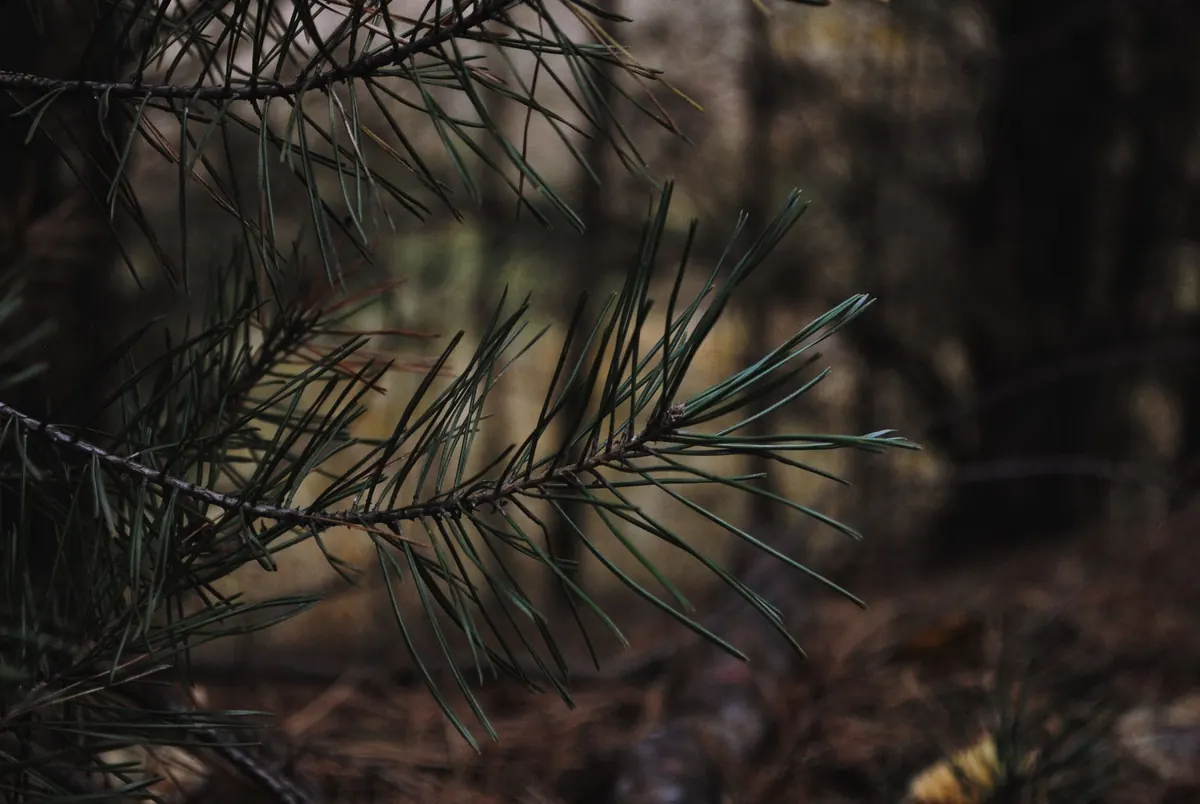
The current season's needles should be the freshest thing on the tree — brighter, longer in the bundle and unblemished. Compare the tree in front of you with the ten beside it. A single dull, yellowish pine among healthy green neighbours is a warning, not a bargain.
Some browning of older needles deep inside the canopy is entirely normal, especially in autumn, as pines shed needles they have held for a few years. What you are looking for is anything that is spreading, or anything on the new growth:
- Banding and tip dieback. Yellow and brown bands with small dark spots, with browning creeping from the needle tips inwards, can point to needle blight. Avoid that tree.
- White woolly specks clustered at the base of needles or along young shoots, which usually means adelgids.
- Sticky residue and black sooty mould on needles and lower branches, the signature of aphids or scale insects.
- Fine webbing and speckled, pale needles, often on stock that has been kept under cover — spider mite.
- Notches bitten out of needle edges, or needles stripped back to the shoot.
Run your hand lightly along a branch. A few older needles falling is fine; a handful coming away in your palm is not. Also check the label and match the needle count: two needles per bundle for Scots and black pines, five for species such as Weymouth pine. If it does not match what you asked for, say so.
Check the trunk, the leader and the branch unions
A good young pine has one straight leader running to the top, with side branches well spaced and narrowing steadily towards the tip. Bark should be sound and dry. Look closely at the base and along the trunk for dark, sunken, weeping patches, which suggest something is attacking the bark rather than a healed knock.
Check for notches chewed out of the bark near ground level, which is typical of weevil damage and can girdle a young tree. Then give the trunk a gentle wobble while holding the pot steady. The tree should feel anchored. If it rocks, the rootball has been disturbed or the tree has been sitting loose in old compost for too long.
If there are two competing leaders, you can train one out over a few years, but you will save yourself work by choosing a tree that already has a clear single stem. Multi-stemmed pines are a deliberate style, not an accident — buy them only when that is what you actually want.
What the pot and compost tell you
Pot furniture is honest. A surface carpeted with liverwort, moss, algae or weeds usually means the tree has been sitting in the same compost for more than one season, and the nutrients are long gone. Look out for compost that has shrunk away from the pot wall, or a container visibly distorted by roots. Ask when the tree was last potted on; a straightforward answer is reassuring.
Do not assume the biggest tree is the best buy. A modest pine in a proportionately generous pot will establish faster than a tall one crammed into a small container, because it has more root in reserve and less top growth to keep supplied. Also ask whether the tree has been outdoors all year. Stock raised under cover will need careful hardening off, and it will scorch if you plant it straight into a sunny border.
Questions worth asking before you pay
- When was it last potted on, and in what compost?
- Has it been standing outside through the winter, or under cover?
- Has anything been treated on it this season, and will it need spraying again?
- May I slide the pot off and look at the roots?
- How often should I water it through its first summer?
- What sort of eventual size and spread should I expect in my soil?
A nursery that answers these without flinching is worth the journey. If you are planting close to a boundary, or clearing anything to make room, check with your local planning authority whether a Tree Preservation Order or conservation area rules apply before you do anything.
Getting it home, and through the first summer
Carry the tree by its pot, never by the trunk, and support the rootball on the journey. Stand it upright if you can, and wrap the canopy loosely if you are driving any distance in summer. Water it thoroughly before you leave the nursery, then plant as soon as you reasonably can. If planting is delayed by more than a few days, stand it in shade and keep the compost just moist.
The first year is about roots, not top growth. Do not expect much height gain, and do not push it with heavy feeding. Water deeply, then let the compost drain, and never leave the pot standing in a saucer of water. Once it is in the ground, mulch around the base without letting the mulch touch the trunk, and stake only if the site is genuinely exposed. If the needles start to discolour in the weeks after planting, take a photograph and go back to the nursery with it — most will recognise the problem on sight and tell you honestly whether it is something the tree will grow through.
Photo: 652234 / Pixabay